Masking the gender and race of job applicants increases diversity in hiring.

Eric Ries writes about his experience in achieving diversity in hiring by masking identifying information from the résumés (emphasis mine):

Now, whenever I screen resumes, I ask the recruiter to black out any demographic information from the resume itself: name, age, gender, country of origin. The first time I did this experiment, I felt a strange feeling of vertigo while reading the resume. “Who is this guy?” I had a hard time forming a visual image, which made it harder to try and compare each candidate to the successful people I’d worked with in the past. It was an uncomfortable feeling, which instantly revealed just how much I’d been relying on surface qualities when screening resumes before – even when I thought I was being 100% meritocratic. And, much to my surprise (and embarrassment), the kinds of people I started phone-screening changed immediately.

And yet, when I suggest this practice to hiring managers and recruiters alike, they rarely do it. Hiring managers say, “the recruiter would never go for it” while recruiters say, “the hiring manager won’t accept it.” What I think we’re really saying is: “I don’t want to know if I am biased.” That’s understandable – it’s embarrassing! Even if our biases are only implicit and not consciously held, the systems we build can still contain bias. When we change a hiring policy, especially if we do it in a visible way, we reap two benefits. We actually improve our hiring process and also signal our commitment to meritocracy.

Read the rest of this entry »

Multiculturalism displaces anti-racism, upholds white supremacy.

Dr. Sunera Thobani, of the University of British Columbia, criticizes the discourse of multiculturalism in Canada (transcript):

I think multiculturalism has been a very effective way of silencing anti-racist politics in this country. Multiculturalism has allowed for certain communities—people of colour—to be constructed as cultural communities. Their culture is defined in very Orientalist and colonial ways—as static, they will always be that, they have always been that. And culture has now become the only space from which people of colour can actually have participation in national political life; it’s through this discourse of multiculturalism. And what it has done very successfully is it has displaced an anti-racist discourse.

You know, I teach and I have young students of colour, they come, and they completely bought into this multiculturalism ideology. They have no language to talk about racism. They know that if they talk about racism, they will get attacked.

Read the rest of this entry »

Dear IT industry: “Meritocracy” does not mean what you think it means.

IT culture is so ignorant about how society works that what would be satire in other contexts is actually how most IT people think. IT people in general are not exactly experts on how people and society work, yet too many individuals in IT like to make bold, confident, and unsupported claims about meritocracy.
Vivek Wadhwa of TechCrunch writes:

Is the Valley deliberately keeping these groups out? I don’t think so. Silicon Valley is, without doubt, a meritocracy. In this land, only the fittest survive. That is exactly the way it should be. For the Valley’s innovation system to achieve peak performance, new technologies need to constantly obsolete the old, and the world’s best techies need to keep making the Valley’s top guns compete for their jobs. There is no room for government mandated affirmative action, and our tech companies shouldn’t have to apologize for hiring the people they need. But at the same time, without realizing it, the Valley may be excluding a significant part of the American population that could be making it even more competitive. False stereotypes may be getting in the way of greater innovation and prosperity.

“Meritocracy” means “a society or social system in which people get status or rewards because of what they achieve”. If some people get status and rewards partly because they are white and male, then the system is not a meritocracy. Such a system would have a racial and gender bias, just like every other industry.

Read the rest of this entry »

Canada is multicultural, not anti-racist.

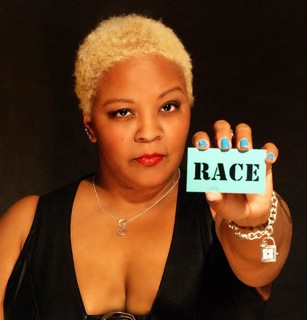
Mollena sells actual RACE Cards (TM) to play. (Photo by Colm McCarthy)Canada is an officially multicultural country, but multiculturalism does not address racism.

The Continuum on Becoming an Anti-Racist Multicultural Institution shows six stages from being a monocultural institution to becoming an anti-racist multicultural institution. Canada appears to be at Stage Three:

3. Symbolic Change: A Multicultural Institution

  • Makes official policy pronouncements regarding Multicultural diversity
  • Sees itself as “non-racist” institution with open doors to People of Color
  • Carries out intentional inclusiveness efforts, recruiting “someone of color” on committees or office staff
  • Expanding view of diversity includes other socially oppressed groups

But…

  • “Not those who make waves”
  • Little or no contextual change in culture, policies, and decision making
  • Is still relatively unaware of continuing patterns of privilege, paternalism and control

Read the rest of this entry »

Vancouver 2010 pretends indigenous people have institutional power over Canada.

The Vancouver 2010 Winter Olympics opening ceremonies were skillfully-done Canadian propaganda. The Vancouver Organizing Committee for the 2010 Olympic and Paralympic Winter Games (VANOC) did so many things right for the opening ceremonies with respect to indigenous-related symbolism. However, the main problem with the opening ceremonies were that they gave the impression to the rest of the world that the Canadian government respects the rights of indigenous people, when indigenous peoples are the most marginalized ethnic groups in Canada.

Read the rest of this entry »

Design a site like this with WordPress.com
Get started